


The shift to electric vehicles (EVs) is accelerating across the UK, and for many drivers, installing a home EV charger is the next logical step. A dedicated charger at home offers convenience, cost savings, and peace of mind—no more queuing at public stations or relying on slow three-pin plugs.
But before you take the leap, it’s essential to understand the EV charger installation requirements, the types of chargers available, and why professional installation by certified specialists is non-negotiable for safety and compliance.
At Lumiel, we specialise in safe, efficient, and future-proof electrical solutions for Sutton and South London. This guide covers everything you need to know to make an informed decision, from choosing the right charger to navigating grants and ensuring your installation meets UK regulations.
Why Install a Home EV Charger?
Home charging is the most cost-effective and convenient way to power your electric vehicle. With a dedicated wallbox, you can:
- Charge overnight and wake up to a full battery, adding 30–40 miles of range per hour with a 7kW charger.
- Save money by taking advantage of off-peak electricity tariffs, which can reduce charging costs to as little as 2p per mile.
- Avoid public charging hassles—no queues, no compatibility issues, and no reliance on external infrastructure.
For most UK homes, a 7kW smart charger is the sweet spot, balancing speed, cost, and compatibility with standard single-phase electrical supplies. However, the right choice depends on your vehicle, driving habits, and home’s electrical capacity.
Types of Home EV Chargers
Not all EV chargers are created equal. Here’s a breakdown of the main options:
1. Tethered vs. Untethered Chargers
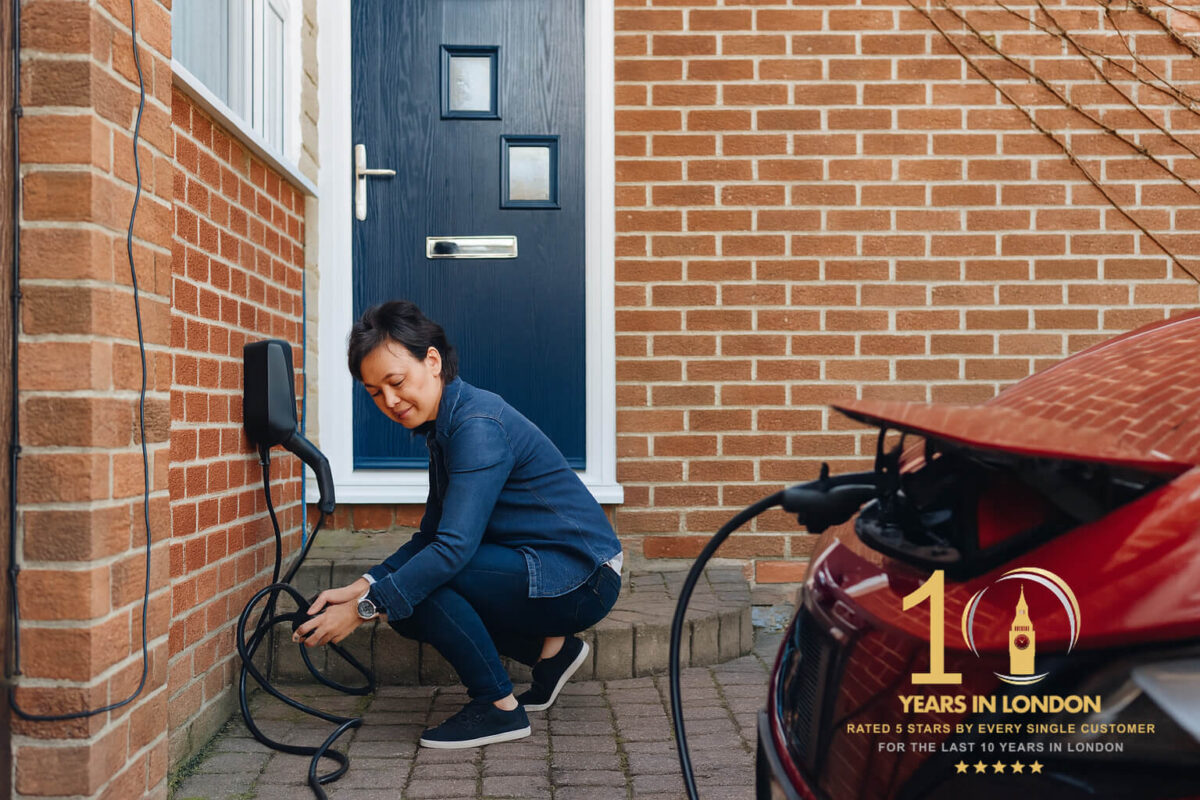
- Tethered chargers come with a fixed cable and plug, offering plug-and-play convenience. Ideal if you only own one EV or prefer a tidy setup.
- Untethered chargers require you to use your own cable, which is more flexible if you switch vehicles or want to charge other EVs. These are often preferred for shared driveways or multi-car households.
2. Smart Chargers
Smart chargers are the gold standard for modern EV owners. They allow you to:
- Schedule charging during off-peak hours to save on electricity costs.
- Monitor energy usage via an app.
- Integrate with solar panels to use renewable energy for charging.
Brands like Ohme, Zappi, and Hypervolt are popular for their smart features, reliability, and compliance with UK regulations.
3. Charging Speeds
- 3–7kW (Slow/Fast): Suitable for overnight charging. A 7kW charger adds ~30 miles of range per hour.
- 11–22kW (Fast): Requires a three-phase supply, which is rare in most UK homes but may be available for commercial properties or larger dwellings.
EV Charger Installation Requirements
Before installing a home EV charger, your property must meet specific electrical and legal standards to ensure safety and compliance.
1. Electrical Capacity
Your home’s electrical system must support the charger’s load. Most UK homes have a single-phase supply, which is sufficient for a 7kW charger. However, your fuse box (consumer unit) must have:
- Enough spare capacity to handle the additional load.
- A main fuse rated between 60–100A.
- RCD/RCBO protection for the EV circuit, as required by BS 7671 wiring regulations.
If your fuse box is outdated or lacks capacity, an upgrade may be necessary, adding £300–£900 to the installation cost.
2. Dedicated Parking Space
You’ll need off-street parking (e.g., a driveway or garage) to install a home charger. This is a requirement for most grants and ensures safe, compliant installation.
3. Cable Runs and Placement
- The charger should be mounted on a permanent structure (e.g., a brick wall or garage).
- Cables must be neatly clipped to walls and avoid trip hazards. The maximum recommended cable run is 10 metres from your consumer unit to the charger.
- The charger should be installed in a safe, accessible position in line with manufacturer instructions and site conditions.
4. Planning Permission and Building Regulations
- Building regulations approval is required for all home EV charger installations in the UK. The work is classified as “notifiable,” meaning it must be reported to your local building control body unless completed by a certified installer who can provide a compliance certificate.
- Planning permission is rarely needed for domestic installations, but check with your local council if your property is listed or in a conservation area.
Do Home EV Chargers Need Expert Specialists to Install Them?
Yes—absolutely. EV charger installation is not a DIY job. Here’s why:
Safety First
Installing an EV charger involves:
- Creating a new electrical circuit from your consumer unit.
- Connecting safety-critical equipment that must comply with UK wiring regulations (BS 7671, Section 722).
- Ensuring the installation is properly earthed and protected to prevent electrical fires or shocks.
A certified electrician (NICEIC or NAPIT registered) will:
- Assess your home’s electrical capacity.
- Install the charger to manufacturer and UK standards.
- Provide an Electrical Installation Certificate (EIC) and Building Regulations Compliance Certificate.
Legal and Insurance Requirements
- Non-compliant installations can void your home insurance and may be unsafe.
- Only OZEV-approved installers can certify that your charger meets the latest UK Smart Charging Regulations.
- If the customer is claiming an OZEV grant, the installer must meet the relevant OZEV grant scheme requirements.
- The electrical work undertaken must be installed, tested, certified and notified correctly under the relevant electrical and Building Regulations.
- Installations completed without proper certification can invalidate home insurance, void manufacturer warranties, and cause problems in the resale of your property.
Lumiel is both NICEIC-approved and an OZEV-authorised installer
Our NICEIC-certified electricians handle every step—from pre-installation surveys to DNO notifications and grant paperwork—so you can charge with confidence.
Costs and Grants for Home EV Charger Installation
Typical Installation Costs
The cost of installing a home EV charger in the UK varies based on:
- The charger model (£400–£700 for a 7kW smart charger).
- Electrical work (£400–£800 for labour, cabling, and upgrades).
- Complexity (e.g., long cable runs, consumer unit upgrades, or three-phase supply).
Average total cost (2026): £800–£1,200 for a standard 7kW installation.
Available Grants
The UK government offers financial support to reduce upfront costs:
1. EV Chargepoint Grant (for Renters and Flat Owners)
- Covers 75% of the cost, up to £500 per socket (increased from £350 in April 2026).
- Eligibility:
- Renters with off-street parking.
- Flat owners (including shared ownership).
- Landlords installing chargers for tenants.
2. Workplace Charging Scheme (WCS)
- For businesses, charities, and public-sector organisations.
- Covers 75% of costs, up to £500 per socket (40 sockets maximum per applicant).
3. Local Authority Support
Some councils offer additional funding for on-street charging solutions (e.g., cross-pavement gullies) for households without driveways.
Note: Grants are not available for homeowners with detached, semi-detached, or terraced properties (since March 2022), but renters and flat owners can still benefit.
Choosing the Right Charger for Your Home
Selecting the best EV charger depends on your needs:
| Factor | Consideration |
| Charging Speed | 7kW is ideal for most homes; 11–22kW requires three-phase power. |
| Smart Features | App control, scheduling, and solar integration add convenience and savings. |
| Tethered vs. Untethered | Tethered is convenient; untethered offers flexibility for multiple vehicles. |
| Weather Resistance | Look for IP65 or IK10 ratings for outdoor durability. |
| Brand Reputation | Choose OZEV-approved models from trusted manufacturers (e.g., Ohme, Zappi). |
For tailored advice, Lumiel offers free site surveys to assess your home’s suitability and recommend the best charger for your budget and lifestyle. View our EV charger installation services here.
EV Charger Installation Process: What to Expect
Here’s a step-by-step overview of a typical home EV charger installation with Lumiel:
- Pre-Installation Survey
- We assess your electrical supply, fuse box, and parking setup to confirm compatibility.
- Provide a fixed-price quote with no hidden fees.
- Charger Selection
- We help you choose a smart, future-proof charger that meets your needs and budget.
- Installation Day
- Our certified electricians install the charger, run cables, and upgrade your consumer unit if needed.
- The process usually takes 2–4 hours for a standard installation.
- Testing and Certification
- We test the installation, ensure compliance with BS 7671, and provide all necessary certificates.
- Handle DNO notifications and grant paperwork (if applicable).
- Handover
- We demonstrate how to use your charger and answer any questions.
- Your safety is our priority—we only sign off when everything is 100% safe and compliant.
Why Choose Lumiel for Your EV Charger Installation?
At Lumiel, we combine expertise, transparency, and a safety-first approach to deliver seamless EV charger installations across Sutton and South London. Here’s what sets us apart:
- Certified and Insured: All our electricians are NICEIC-approved and trained in the latest EV charging standards.
- Transparent Pricing: No hidden fees—just fixed-price quotes tailored to your home.
- Grant Assistance: We handle all OZEV grant applications and paperwork for eligible customers.
- Future-Proof Solutions: From smart chargers to solar integration, we ensure your setup is ready for tomorrow’s technology.
- Local and Trusted: As a Sutton-based business, we understand the unique needs of South London homeowners.
Is a Home EV Charger Right for You?
Installing a home EV charger is a smart investment for any electric vehicle owner. It offers unmatched convenience, cost savings, and peace of mind—provided it’s done safely and compliantly by certified professionals. While the upfront cost may seem significant, government grants and long-term savings on fuel and charging make it a worthwhile upgrade for most households.
Do home EV chargers need expert specialists to install them? Without a doubt. Safety, legality, and performance depend on professional installation. At Lumiel, we make the process simple, stress-free, and tailored to your needs.
Ready to Go Electric?
Contact Lumiel today for a free, no-obligation quote and site survey. Our team will guide you through every step, from choosing the right charger to completing a safe, compliant installation.
