


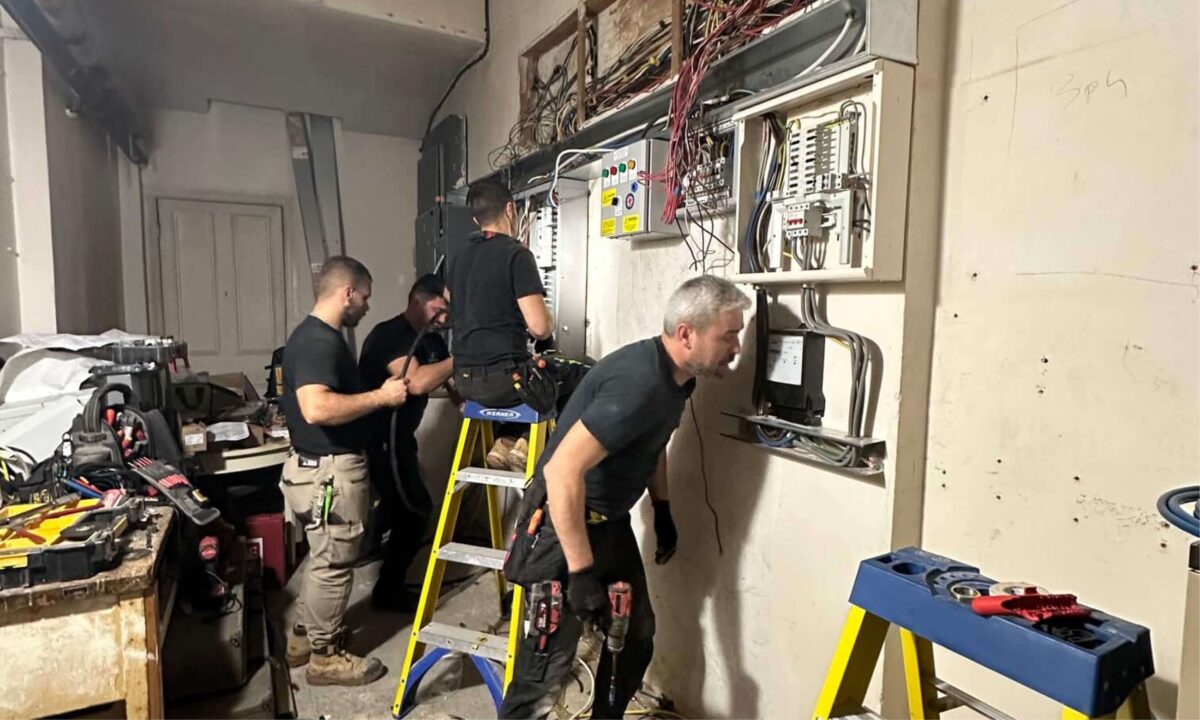
Most of an electrical installation is hidden from view. Cables run inside walls, connections sit above ceilings, and earthing arrangements are often out of sight. An inspection establishes the true condition of all of it, not by looking, but by testing.
This guide explains what an inspection covers, how often you need one, and what the report tells you.
The Inspection and the Document
People search for an electrical safety inspection, a home electrical safety check, or a periodic inspection. In practice, these terms describe the same service.
The document you receive has one official name: an Electrical Installation Condition Report (EICR). That is what you will be quoted for and what you receive afterwards.
It replaced the older Periodic Inspection Report some years ago, though the term persists. Landlords sometimes call it a landlord safety certificate. Estate agents refer to it as a homebuyer electrical report. The inspection itself remains the same.
One distinction is critical. An EICR reports on the condition of an existing installation. It is not the certificate issued after new work, which is an Electrical Installation Certificate (EIC). If you have recently had a fuse board replaced, you should hold an EIC, not an EICR.
What the Inspection Covers
An inspection has two key parts. The second is what separates it from a simple visual check.
The Visual Inspection
We examine:
- Consumer unit and protective devices
- Sockets, switches, and light fittings
- Accessible cable routes
- Earthing and bonding
- Any visibly damaged, overloaded, or incorrectly installed components
The Testing
Testing uncovers what cannot be seen. It includes:
- Dead testing (with the supply isolated):
- Continuity of protective conductors
- Insulation resistance
- Polarity checks
- Live testing:
- Earth fault loop impedance
- RCD disconnection times
- Testing reveals hidden issues:
- Degraded insulation within a wall
- An RCD that appears sound but disconnects too slowly
- A circuit that would not disconnect quickly enough under fault conditions
That is the real value of an inspection. A visual check reports what looks wrong. Testing establishes what is wrong.
How Often You Need One
If You Let the Property
Landlords in England must have the installation inspected and tested at least every five years. You must:
- Supply the report to existing tenants within 28 days of the inspection
- Provide it to a new tenant before they move in
- Share it with the local authority within seven days of a request
Penalties for non-compliance can reach £30,000.
A common misconception: A new tenancy does not require a new inspection. If your report is still within its five-year validity, it stands. You must simply provide a copy to the new tenant before they occupy the property, and the report must be satisfactory before they move in.
If You Own and Live in the Property
There is no legal requirement for owner-occupiers. However, the recommended interval is approximately every ten years, or on change of occupancy.
If You Are Buying
It is worth arranging an inspection before you commit. A standard home survey does not test the electrical installation.
If the Installation Indicates a Problem
Book an inspection sooner if you notice:
Or if the property has not been inspected in decades and its history is unknown
What to Expect on the Day
Your supply will be switched off in stages. Dead testing requires circuits to be isolated, so it is worth planning around.
We need clear access to:
- The consumer unit
- Sockets and switches throughout the property
- The loft (where wiring is present)
- Clearing access to the board saves time.
- We work methodically, circuit by circuit, recording readings as we go. The process is thorough rather than quick, being precise is the point.
- You then receive the report, and we talk you through what it contains.
Reading the Report
The report is returned as satisfactory or unsatisfactory, with any issues coded as follows:
C1: Danger Present
Risk of injury. Immediate action required. We make it safe before leaving and inform you at the time.
C2: Potentially Dangerous
Not an immediate danger, but remedial work is required. A bathroom circuit without RCD protection is a common C2.
C3: Improvement Recommended
Does not fail the report. It does not meet the current standard, but it is not unsafe.
FI: Further Investigation
Something was identified that could not be resolved during the inspection.
Any C1 or C2 makes the report unsatisfactory. A C3 does not. This is a common source of confusion, as a report can carry several C3 items and still pass.
What Happens After the Inspection
If the report is satisfactory:
No further action is needed until the next inspection. Please keep it with your property documents.
If the report is unsatisfactory:
We provide a separate fixed-price quote for the remedial work. You are under no obligation to have us carry it out, and the report is yours either way.
We report exactly what we find. A C3 is recorded as a C3. If your installation is in sound condition, the report will say so.
Once remedial work is complete, you receive certification for it, and the installation can be recorded as satisfactory.
Book an Electrical Safety Inspection
If you are letting a property, buying one, or your electrics have never been checked, an inspection establishes where you stand.
Lumiel is an NICEIC-approved contractor, fully insured, and we test to BS 7671. You receive:
- The report
- A clear explanation of its contents
- A fixed price for any remedial work
- No hidden fees
- 24-Hour Electrician – Always Available
- No Hidden Fees – Transparent Pricing
- Fixed Price and Timeline – No Surprises
Call Lumiel to book an inspection.
Frequently Asked Questions
In practice, nothing. An electrical safety inspection is what people call it. An EICR is the document it produces. If an electrician quotes you for an EICR, that is the inspection you were asking about.
No. There is no legal requirement for owner-occupiers. It becomes a legal requirement when you let the property, at which point it is required at least every five years. For your own home, it is a recommendation and a sensible one if it has been ten years or more since the last inspection or you have recently moved in.
It means a C1 or C2 was identified. Anything immediately dangerous is made safe on the day. Everything else is listed with a code, and we quote for the remedial work separately. An unsatisfactory report is not a disaster, it is a clear list of what needs doing, in order of priority.
