


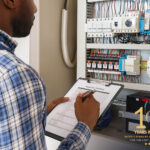

Electrical faults can be frustrating, disruptive and, in the wrong circumstances, dangerous. At Lumiel, we specialise in electrical fault finding for homes and businesses in Sutton, South London and Surrey. Lumiel is an NICEIC-approved contractor, and our electricians follow a systematic approach to find the root cause of any electrical issue, so the fix is safe, efficient and lasting.
Whether your lights are flickering, your sockets are not working or your circuit breaker keeps tripping, we diagnose the problem properly and trace it back to its source, so the fault is resolved rather than masked.
In this guide, we explain what fault finding is, what your symptoms tell us, how we diagnose them, the difference between MCBs and RCDs and what you can do before we arrive.
What Is Electrical Fault Finding
Electrical fault finding is the process of identifying the cause of an electrical problem in your home or business. It involves a combination of visual inspection, testing with specialised equipment and logical deduction to pinpoint the exact issue.
Faults can range from a simple loose connection to more complex issues like earth leakage, short circuits or a faulty appliance. A thorough fault-finding process ensures that the problem is resolved safely and prevents it from coming back.
For an overview of electrical safety around the home, the Electrical Safety First guidance is a solid starting point. Workplace risks are covered separately by the Health and Safety Executive (HSE), which enforces the Electricity at Work Regulations 1989.
At Lumiel, our fast-response electricians follow a safe, methodical and reliable approach to fault finding. We use current diagnostic equipment and our experience to restore safe, stable power to your property.
What Your Symptoms Tell Us About the Fault
A symptom on its own rarely identifies a fault. What it does is narrow the search. The pattern you describe tells us where to begin testing, which circuits to isolate first and what we can rule out before we arrive.
- A breaker that trips again the moment you reset it. Points to a fault that is still live on the circuit, such as a short circuit or an earth fault, rather than a one-off overload. We start at the consumer unit and work outwards.
- A breaker that only trips when one appliance runs. Points to the appliance or its connection rather than the fixed wiring. Careful elimination usually settles this in a single visit.
- Lights that dim when a heavy load starts up. Points to voltage drop or a loose connection on the supply side, not to the light fitting itself.
- One dead socket while the rest of the circuit works. Points to a loose or broken connection at that point rather than a whole-circuit failure. Continuity testing locates it.
- Burning smells or scorch marks. Point to heat building at a connection. This is the one symptom we treat as urgent whatever the underlying cause turns out to be.
- A fault that comes and goes. The hardest to trace, because it may not be present while we are testing. We work out what triggers it, such as load, temperature, moisture or movement, and test under those conditions rather than waiting for it to reappear.
If you notice burning smells, scorch marks or repeated tripping, act quickly. Electrical faults can pose serious risks, including electric shocks and fires.
Where the same symptoms keep returning across several circuits, the question often shifts from what the fault is to whether the installation is still fit for purpose. These guides cover that side of it:
- Do I Need to Upgrade My Fuse Box? Signs to Look For Start here if frequent tripping and the age of the unit point to the consumer unit itself.
- Signs Your Home Needs Rewiring. Start here if the wiring is old, the sockets are discoloured or the installation is no longer coping with the load.
- 12 most common electrical problems and how to fix them safely. A wider view of what goes wrong around the home and what causes it.
How We Diagnose Electrical Faults
At Lumiel, we follow a systematic, safety-first approach to fault finding. Here is how we track down and resolve electrical problems.
Step 1: Visual Inspection
We start by visually inspecting your consumer unit, sockets, switches and wiring for any obvious signs of damage, wear or poor connections. We also check for scorch marks, burning smells or overheating.
Step 2: Circuit Isolation
If a circuit breaker is tripping, we isolate the affected circuit to determine whether the issue lies with a specific appliance, a socket or the wiring itself. This involves switching off individual circuits and testing them one by one.
Step 3: Testing with Specialised Equipment
We use professional diagnostic tools to carry out the following tests:
- Insulation resistance testing checks for deterioration in the wiring insulation.
- Continuity testing ensures all circuits are complete and there are no breaks.
- Earth fault loop impedance testing measures the resistance of the earth path to confirm it can safely carry fault current.
- RCD testing confirms that your RCD is functioning correctly and tripping at the correct current level.
These tests form part of the wider inspection and certification process. If you would like the technical background, Electrical Safety First’s RCD guidance is a clear reference. For a full inspection of your installation, see our electrical testing and certification service.
Step 4: Appliance Testing
If the fault appears to be linked to a specific appliance, we test each appliance on the circuit to identify the culprit. This is done by careful elimination rather than guesswork.
Step 5: Remedial Work
Once the fault is identified, we carry out the necessary repairs or replacements. This could involve fixing loose connections, replacing damaged wiring or, in some cases, upgrading your consumer unit. We provide a fixed price and timeline for all remedial work, so you know exactly what to expect.
MCB vs RCD: What Is the Difference
Understanding the difference between an MCB (Miniature Circuit Breaker) and an RCD (Residual Current Device) is key to making sense of what is going on when something trips.
MCB (Miniature Circuit Breaker)
Purpose: protects your electrical circuits from overloads and short circuits.
How it works: trips when the current flowing through the circuit exceeds its rated capacity, preventing overheating and fires.
What it protects: your wiring and appliances from damage caused by excessive current.
Tripping causes: an overload (too many appliances on one circuit) or a short circuit (live wire touching a neutral or earth wire).
RCD (Residual Current Device)
Purpose: protects people from electric shocks and reduces the risk of electrical fires.
How it works: monitors the balance of current flowing through the live and neutral wires. If it detects an imbalance (earth leakage), it trips the circuit.
What it protects: people from electric shocks, by cutting the power if current is leaking to earth.
Tripping causes: earth leakage (current escaping through a fault, moisture or a person).
Key Differences
- An MCB trips due to overcurrent (overload or short circuit).
- An RCD trips due to earth leakage (current escaping the circuit).
- An RCBO combines both MCB and RCD functions in a single device, providing overcurrent and earth leakage protection for a single circuit.
If your MCB is tripping, the issue is usually an overload or short circuit. If your RCD is tripping, the problem is likely earth leakage. The Electrical Safety First safety-around-the-home guidance covers how to interpret each in more detail.
What to Do Before We Arrive
While we always recommend calling a qualified electrician for electrical faults, there are a few safe steps you can take before we arrive:
- Check your consumer unit. See if any MCBs or RCDs have tripped. If so, try resetting them once. If they trip again, do not keep resetting them, as this can cause further damage.
- Unplug appliances. If a specific circuit is tripping, unplug all appliances on that circuit and see if the problem persists.
- Look for obvious signs. Check for burning smells, scorch marks or damaged sockets and switches.
- Note the pattern. Does the fault happen at a specific time, when a certain appliance is used or during wet weather? This information helps us diagnose the issue faster.
Important: never attempt to carry out electrical repairs yourself. Always follow the safe isolation procedure and leave the work to a qualified electrician. For general guidance on electrical safety at work and at home, the HSE electrical safety pages set the baseline standard.
When to Call Us
You should call Lumiel for electrical fault finding if:
- Your circuit breaker keeps tripping and you cannot identify the cause.
- You notice flickering lights, buzzing sounds or burning smells.
- Your sockets or switches are not working, or you see scorch marks.
- You experience intermittent faults that come and go.
- You are unsure about the safety of your electrical installation.
Our fast-response electricians are available to diagnose and fix electrical faults promptly, so your home or business stays safe and functional. For urgent issues, our emergency electricians attend across Sutton, South London and Surrey.
Trust Lumiel for Reliable Electrical Fault Finding
Electrical faults can be complex, but with Lumiel you can rely on a diagnosis and repair carried out properly. As an NICEIC-approved contractor, we use professional tools and current techniques to track down faults, so the result is a safe and lasting solution.
When you get in touch, we arrange a visit at a time that suits you, diagnose the fault on site and explain what we have found. You will have a fixed price and timeline before any remedial work begins. Contact Lumiel for electrical fault finding in Sutton, South London and Surrey.
Frequently Asked Questions
An RCD trips when it detects earth leakage, which can be caused by a faulty appliance, damaged wiring, moisture ingress or a cumulative leakage issue across multiple circuits. Electrical Safety First’s RCD guide explains the mechanism in more detail. If your RCD keeps tripping, have it checked by a qualified electrician to identify and resolve the underlying cause.
An MCB trips due to an overload (too many appliances on one circuit) or a short circuit (a live wire touching a neutral or earth wire). If your MCB keeps tripping, try unplugging appliances to identify the cause. If the problem persists, call an electrician to inspect your wiring.
An intermittent electrical fault is one that occurs sporadically, often under specific conditions. Common causes include loose connections, thermal issues such as overheating, moisture ingress or a faulty appliance. These faults can be tricky to diagnose, but our electricians have the tools and experience to track them down.
